




Külli Luha
Analyst of the Courts Division of the Ministry of Justice and Digital Affairs
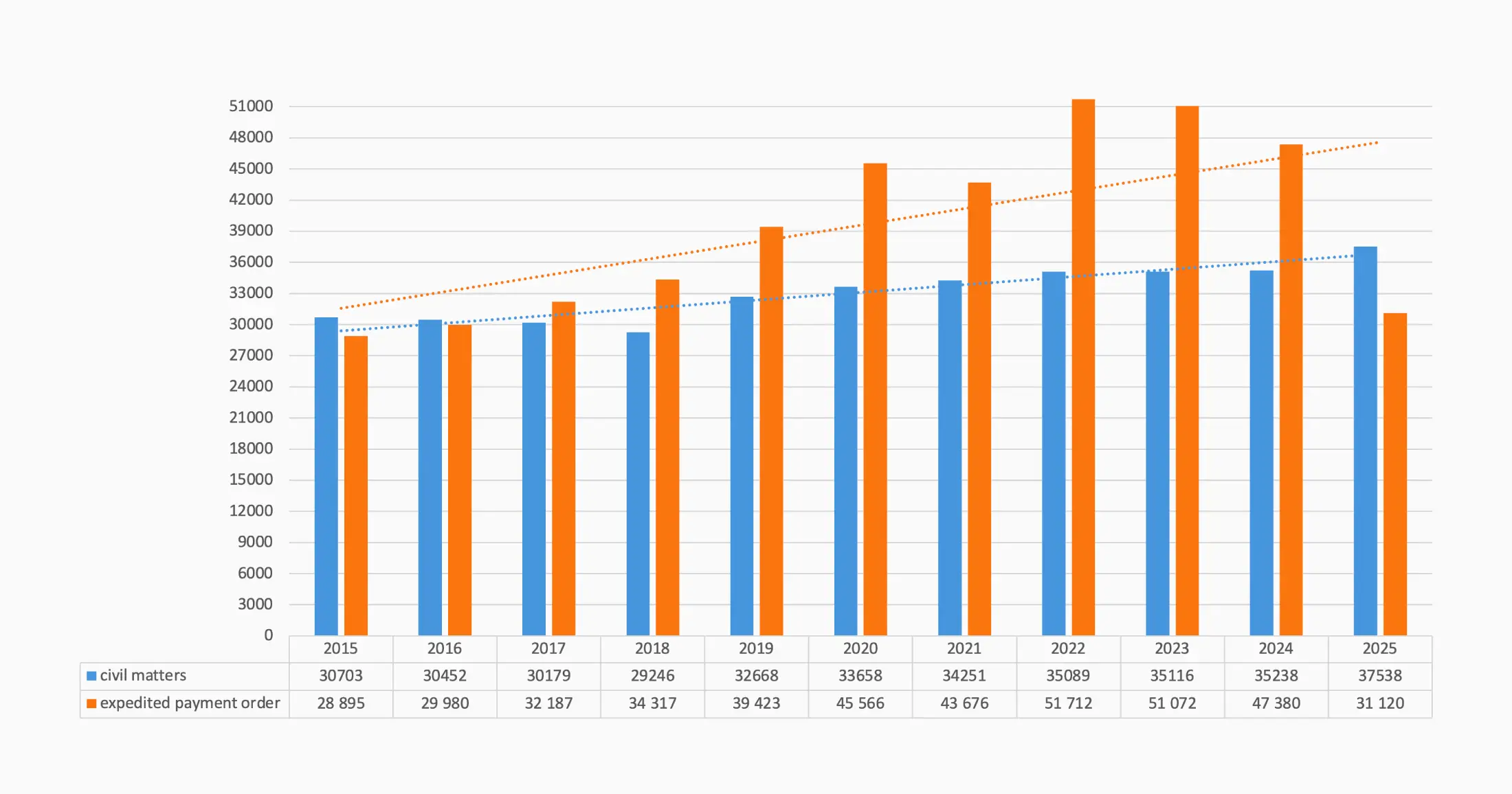
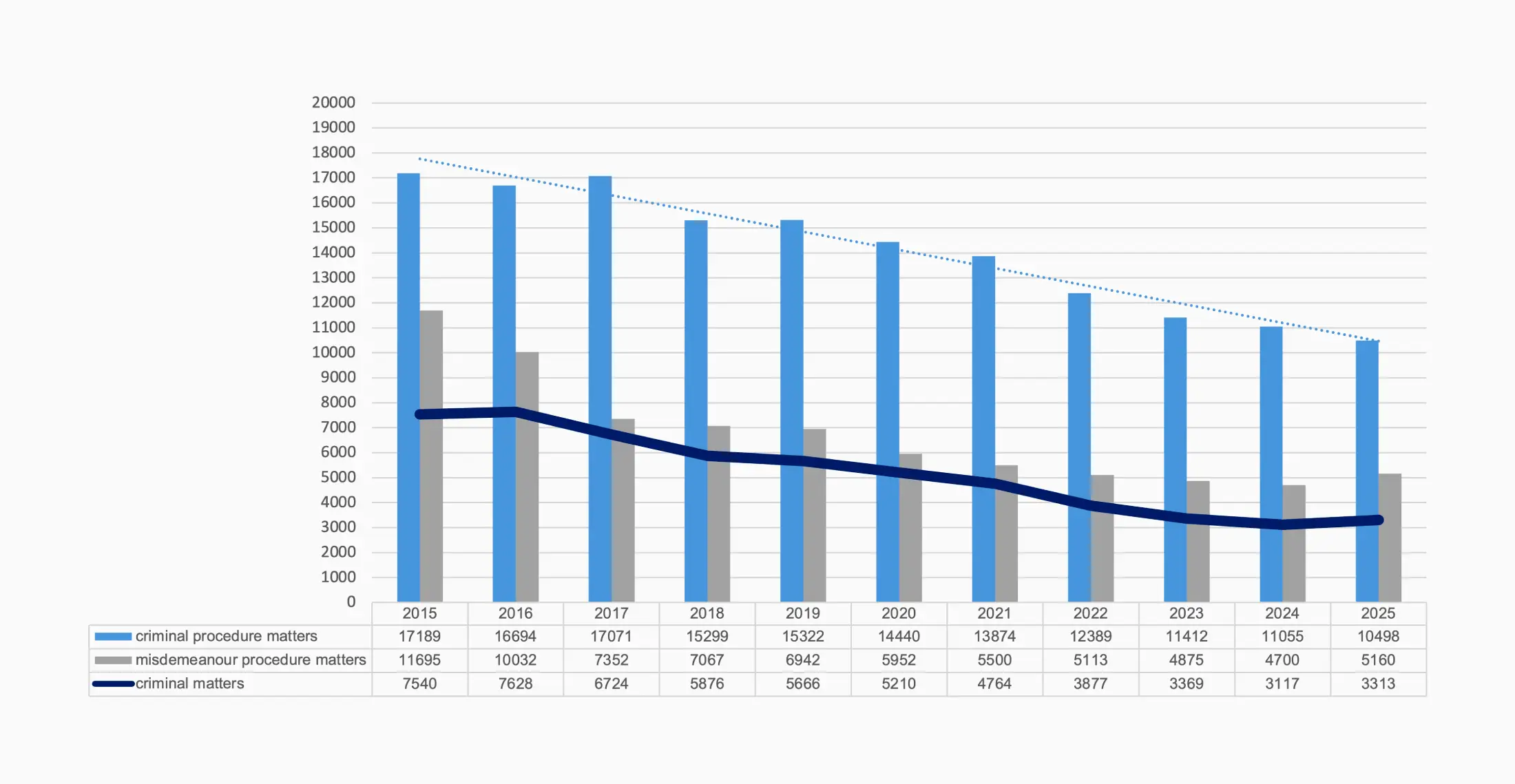
In 2025, 37,538 civil matters (6.5% more than in 2024) and 31,120 expedited payment order matters (34.3% less than in 2024) reached the district courts; 10,498 criminal procedure matters reached the courts[1], of which 3,313 were criminal matters (6.3% more than in 2024); and there were 5160 misdemeanour procedure matters (9.8% more than in 2024).
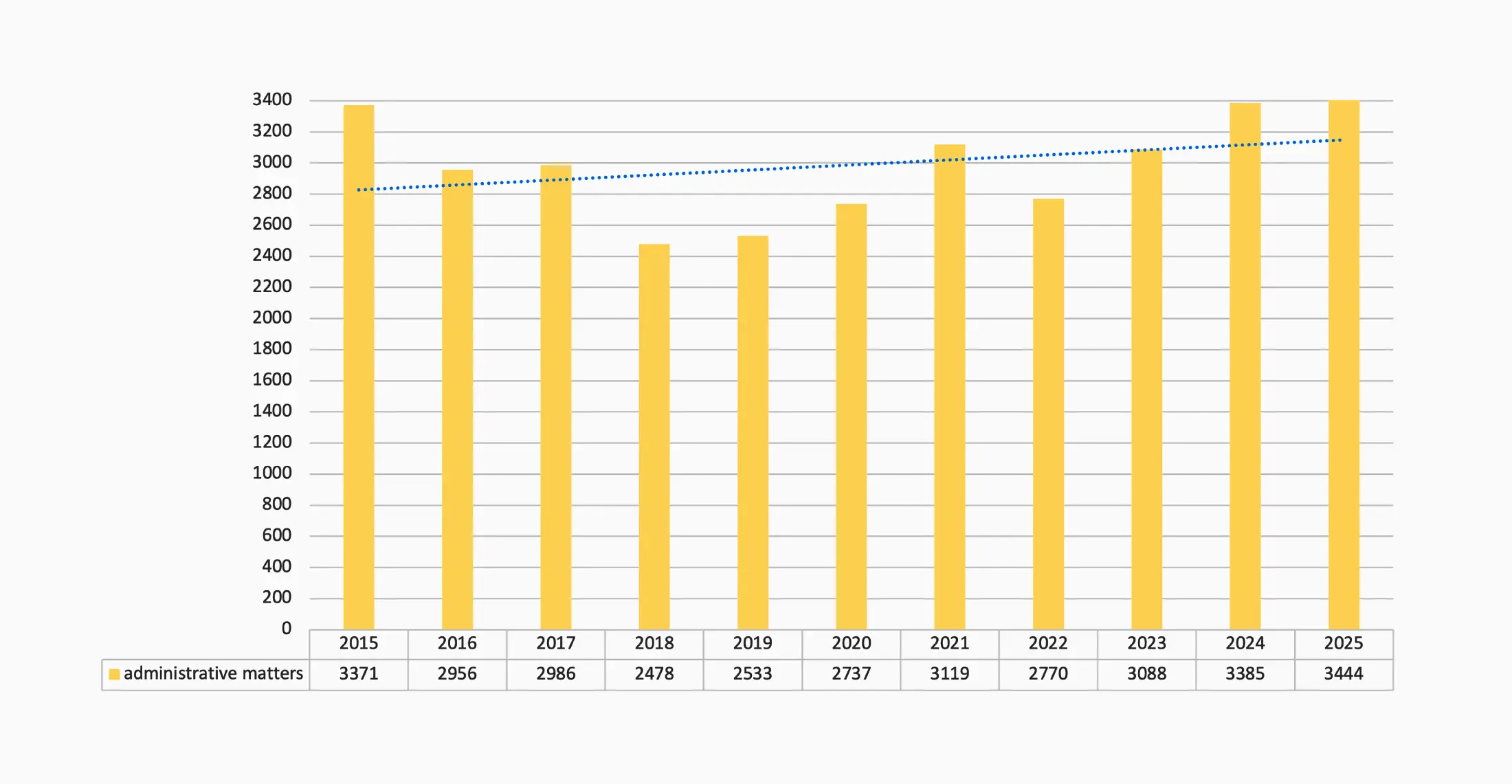
Administrative courts received 3444 administrative matters for adjudication (1.7% more than in 2024).
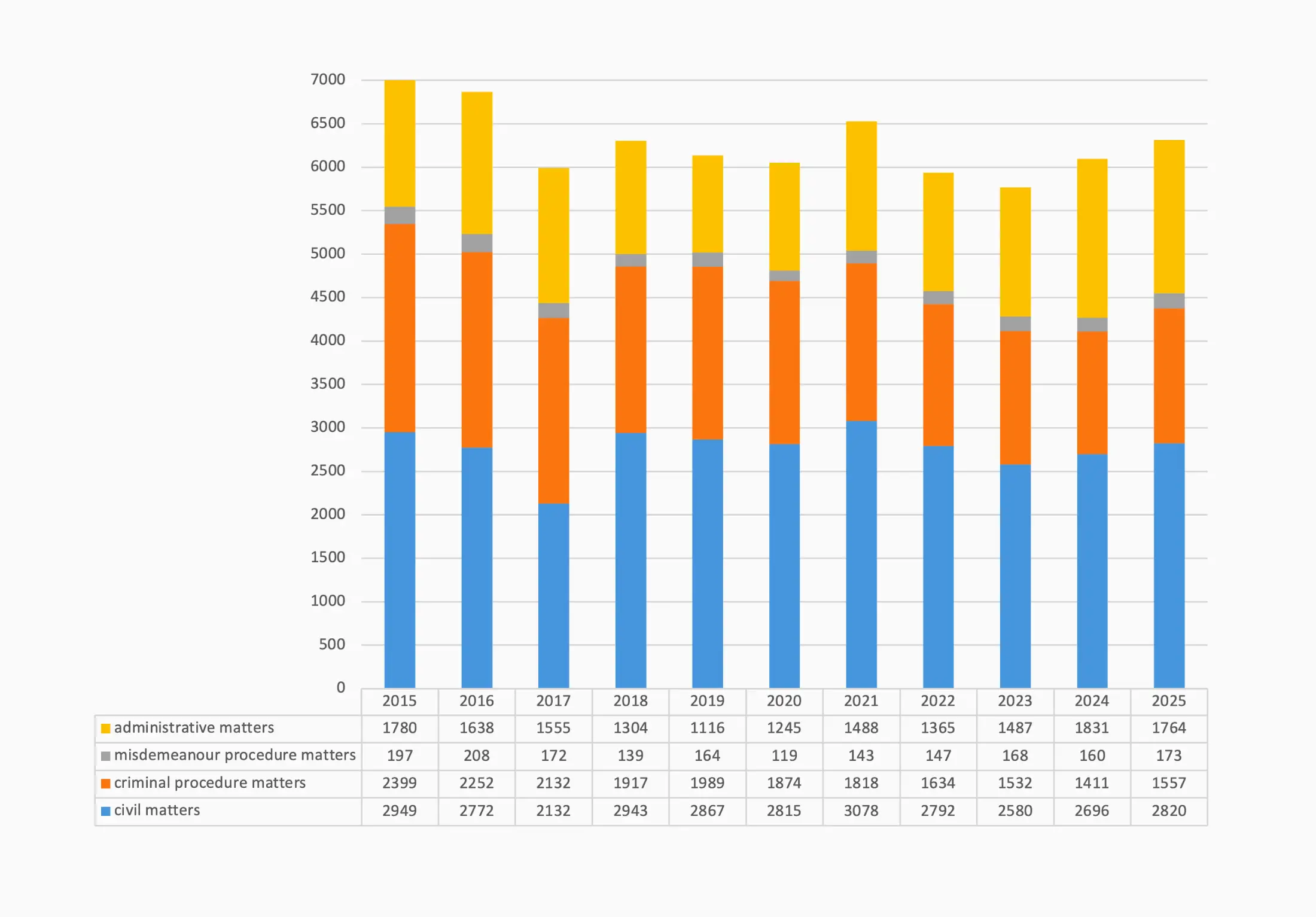
Circuit courts received a total of 2820 civil procedure matters (4.6% more than in 2024), 1764 administrative procedure matters (3.7% less than in 2024), 1557 criminal procedure matters (10.3% more than in 2024) and 173 misdemeanour procedure matters (8.1% more than in 2024) in appeal and ruling proceedings.
More detailed data on the 2025 procedural statistics of the courts of first and second instance, i.e. the longer trend of matters received and adjudicated and the longer trend of the average duration of adjudicated matters by type of proceedings, are published on the courts’ website.[3]
Adjudication of civil matters in district and circuit courts
In 2025, a total of 34,697 civil matterswere adjudicated in district courts , of which 17,710, or 47.2%, were adjudicated in Harju District Court, 10,137, or 27.0%, in Tartu District Court, 4924, or 13.1%, in Viru District Court and 4747, or 12.7%, in Pärnu District Court. All district courts had a negative matter adjudication rate (92% on average), i.e. more matters were received than resolved.
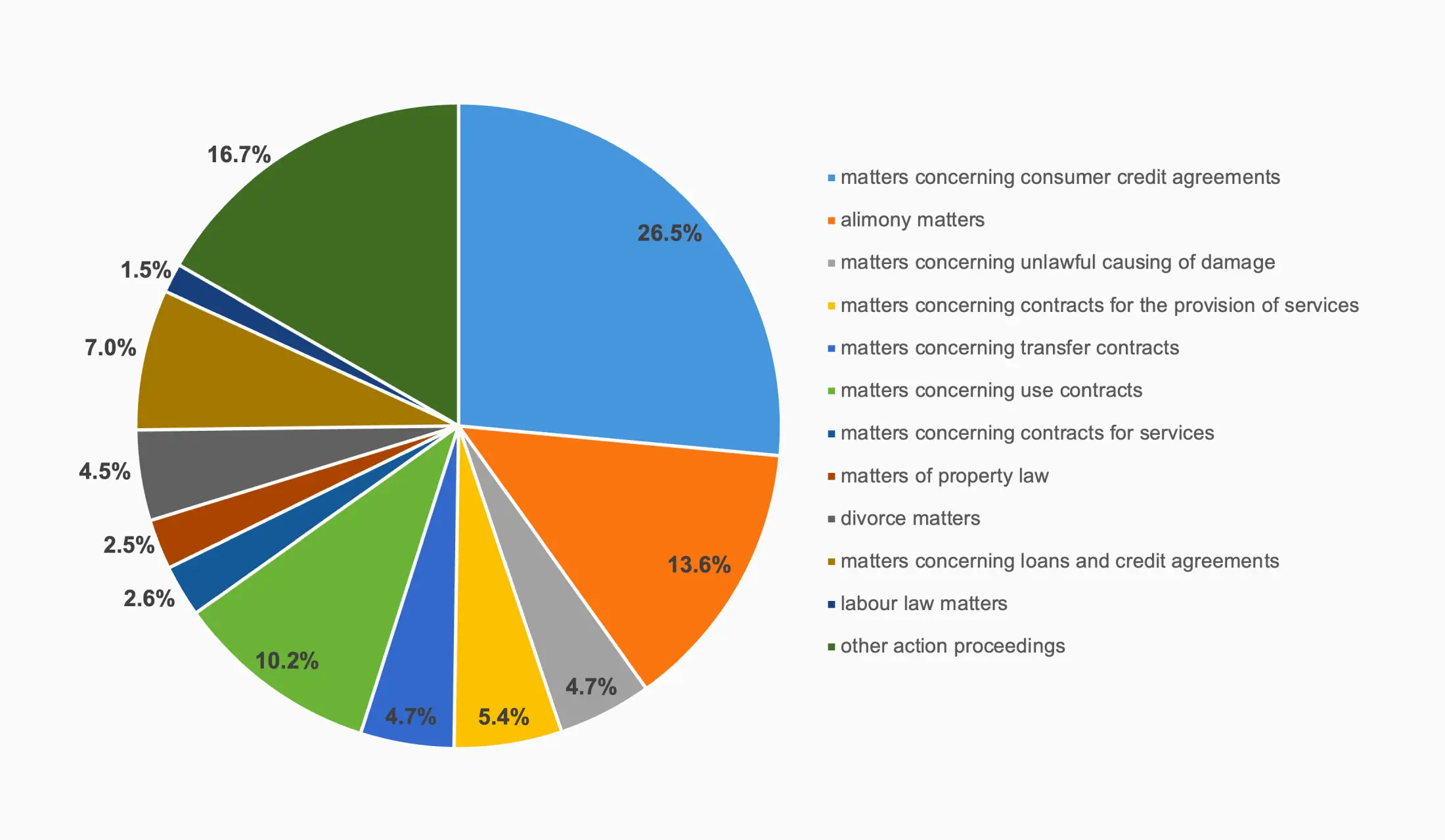
A total of 15,659 civil matters were adjudicated in the action proceedings, the vast majority of which were matters of the law of obligations. The highest number of matters in the district courts was in consumer credit agreements (4145 matters, or 26.5% of the total number of action proceedings), loan and credit agreements (1102 matters, or 7.0%) and user agreements (1601 matters, or 10.2%). The figure below shows a more detailed breakdown of the matters in the action proceedings.
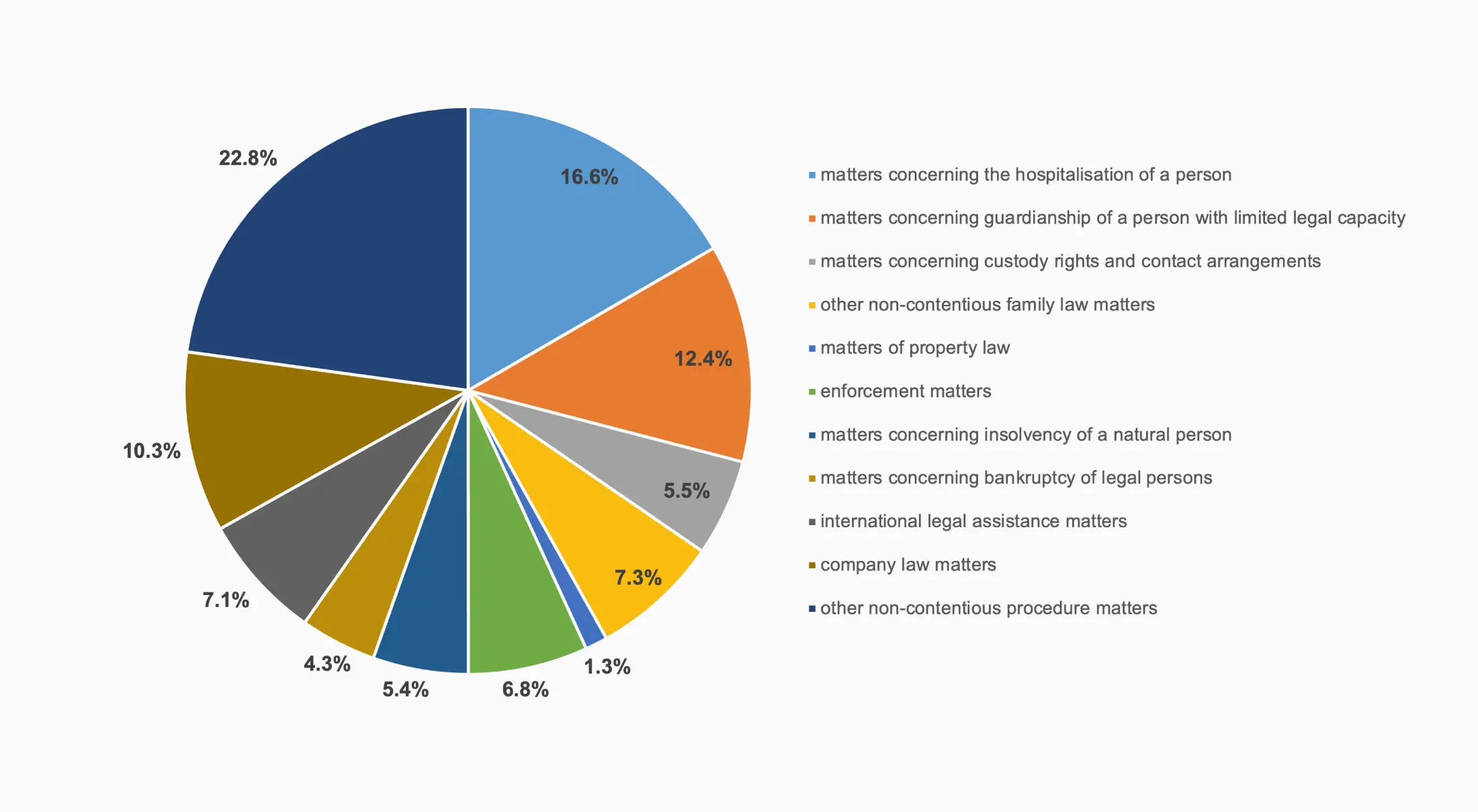
The district courts adjudicated a total of 19,038 civil matters in petition proceedings, with the highest number of matters involving the placement of a person in hospital (3167 matters, or 16.6% of the total number of petition matters) and matters concerning the appointment and extension of guardianship of an adult with limited legal capacity (2364 matters, or 12.4%). A more detailed breakdown of the petitionary matters is shown in the following graph.
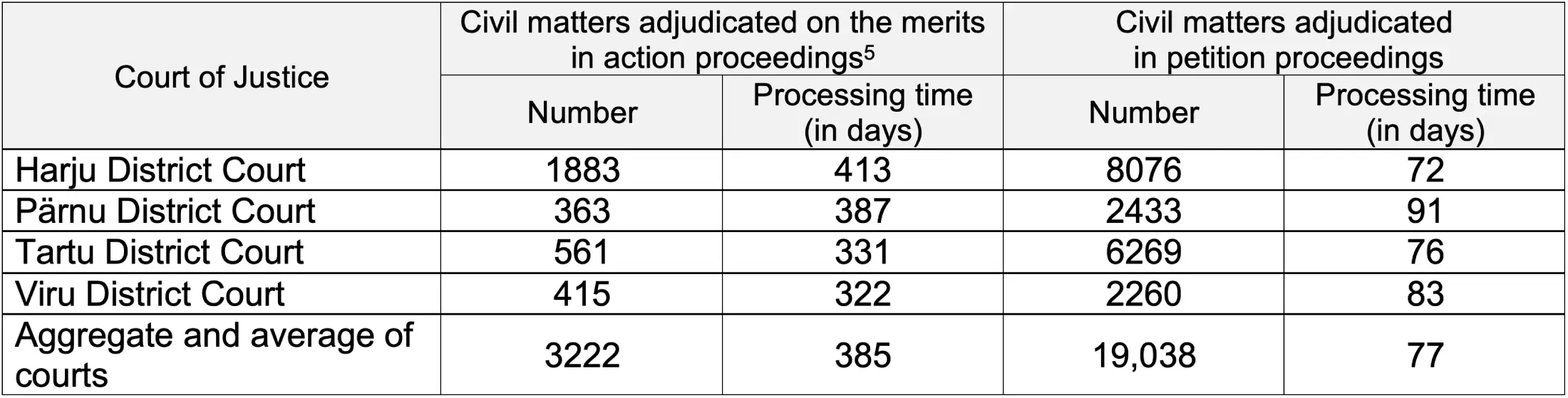
The overall average processing time for adjudicated civil matters in district courts was 129 days. In a comparison of district courts, the average processing time differed by 35 days, ranging from 107 days in Tartu District Court to 142 days in Harju District Court.[4]
The longest are the action proceedings adjudicated on the merits. In total, 3222 civil matters were adjudicated on the merits in the district courts with an average processing time of 385 days. The average processing time for petition proceedings is 77 days. For a more detailed overview of average processing times, see the table below.
2758 proceedings were concluded with the approval of the compromise, or about 8% of the total number of adjudicated matters (mainly in matters of the law of obligations, alimony and custody).
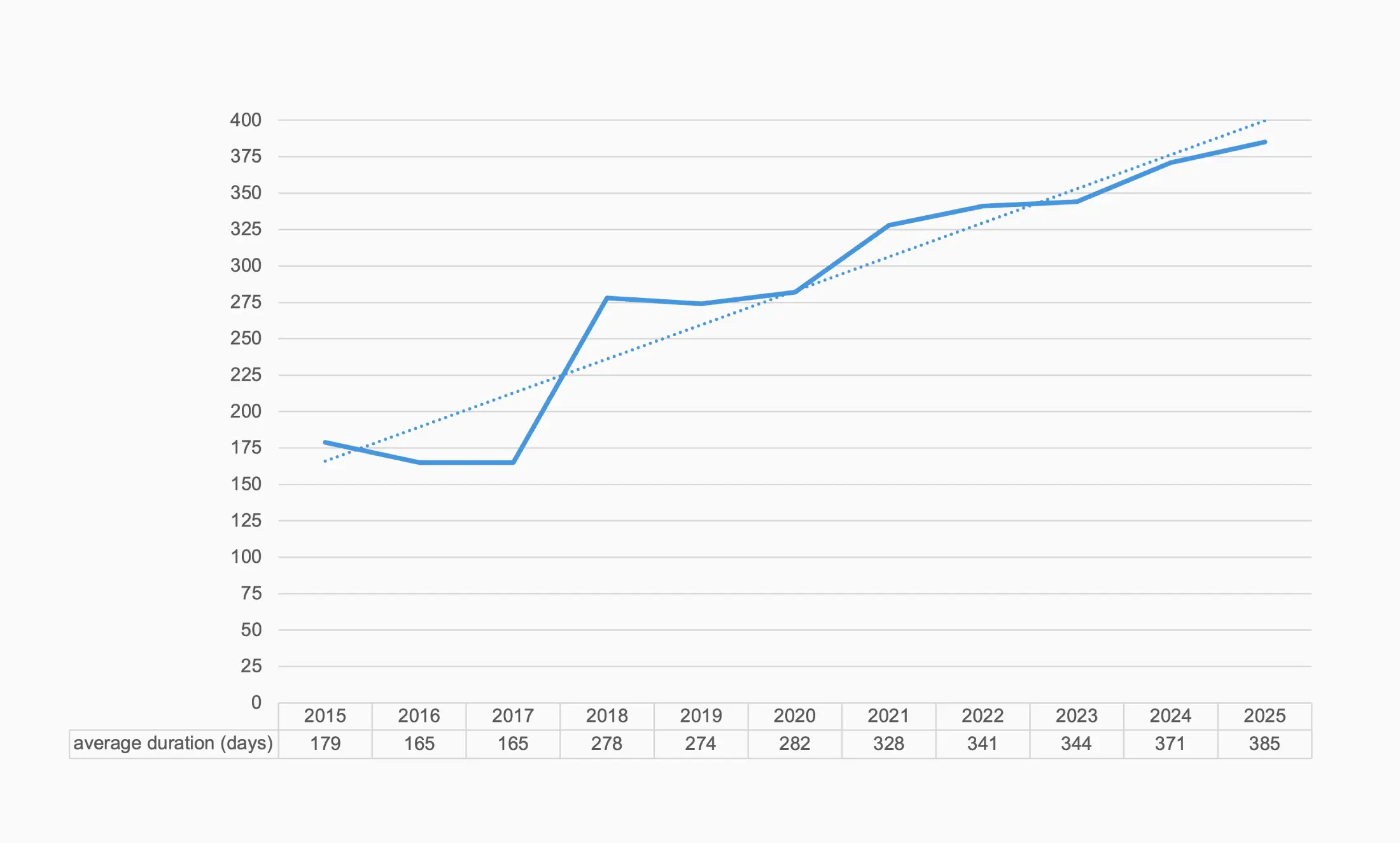
The average processing time in district courts over a longer period is shown in Figure 7.
In 2025, 82.5% of civil matters were adjudicated in written proceedings. Although the proportion of written proceedings varies somewhat from one district court to another, the substantive breakdown is similar in all courts. The share of written proceedings is highest in international legal assistance matters (99% of adjudicated matters are resolved in written proceedings), company law matters (95%) and matters of law of obligations (90%). The smallest share of written proceedings is in matters concerning the insolvency of natural persons (48%), labour law (54%) and family law (61%).
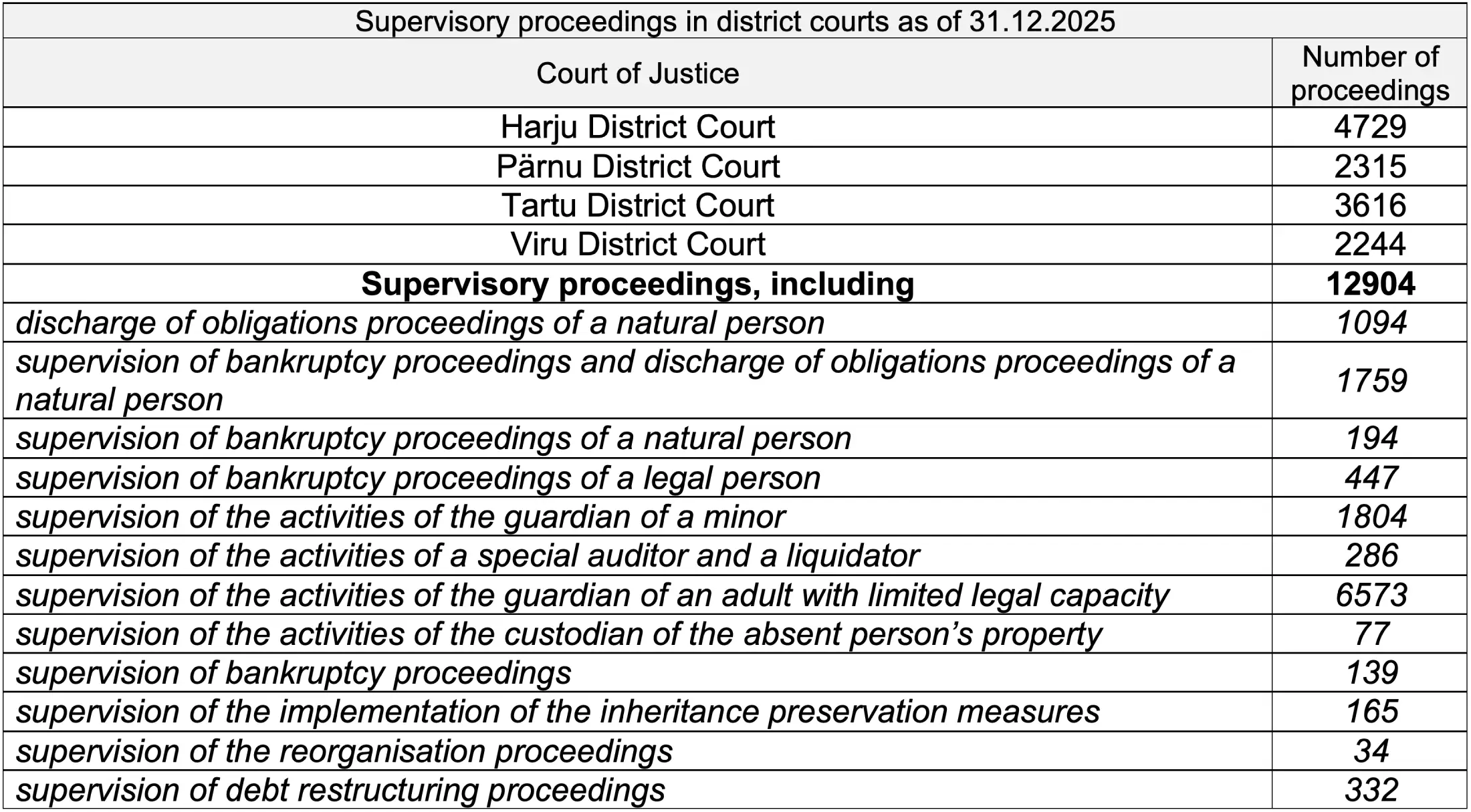
In 2025, there were 12,904 supervisory proceedings in district courts, of which the largest share (around 65% of the total number of supervisory proceedings) is supervisory proceedings on the activities of guardians of adults and minors with limited legal capacity, followed by supervisory proceedings on bankruptcy proceedings of natural persons (around 17%). For a more detailed overview of the number of supervisory proceedings by type, see the table below.
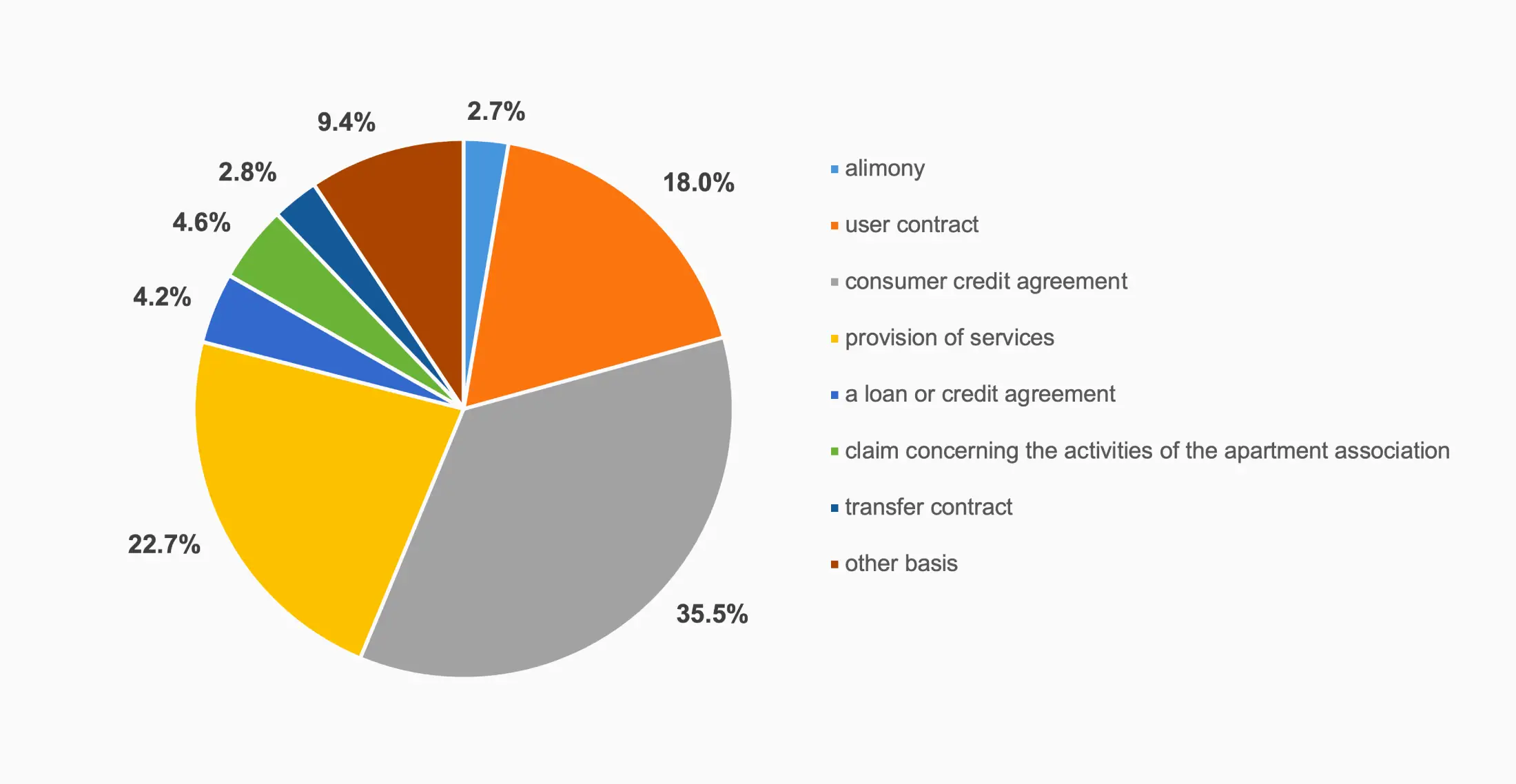
In 2025, 34,866 matters were adjudicated in the expedited payment order proceedings, with an average processing time of 60 days. Just as the number of received expedited payment order matters has decreased in recent years, the number of adjudicated expedited payment order matters has also decreased, with 31.7% fewer compared to 2024 and 35.4% fewer compared to 2023, with the decrease coming at the expense of consumer credit claims (58.0% fewer consumer credit claims were adjudicated in 2025 than in 2023). For a more detailed overview of the distribution of the claims underlying matters adjudicated in 2025, see Figure 8.
In alimony claims, 932 expedited payment order proceedings were adjudicated in 2025 (average processing time 39 days), of which 397 applications were granted, 344 were transferred to action proceedings, 12 applications were dismissed and 179 were closed.
In debt claims, 33,934 expedited payment order proceedings were adjudicated in 2025 (average processing time 60 days), of which 21,451 applications were granted, 7497 were transferred to action proceedings, 750 were dismissed and 4236 were closed.
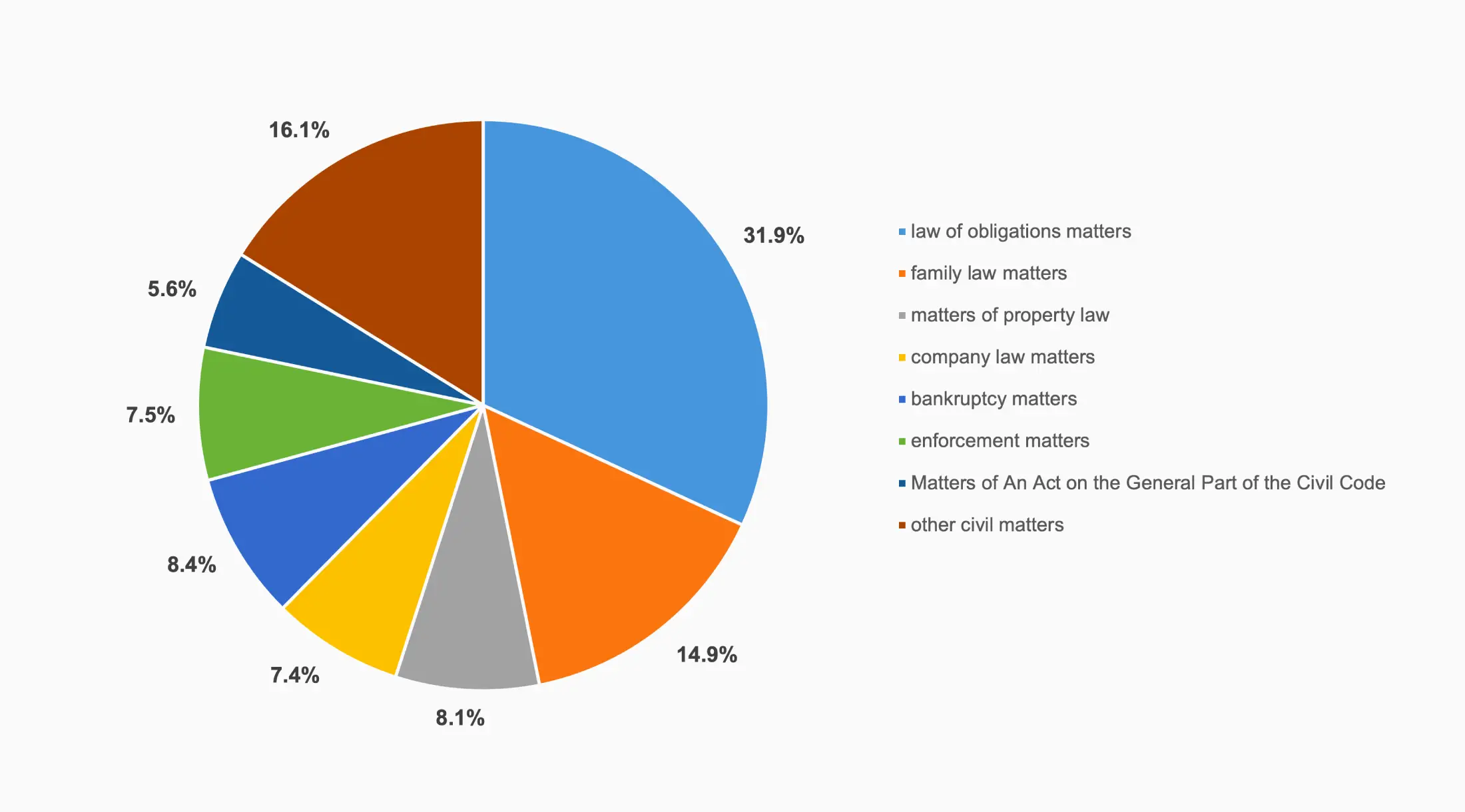
A total of 2609 civil matters were adjudicated in the circuit courts (1.66% less than in 2024), of which 1844 appeals and interlocutory appeals were adjudicated in the Tallinn Circuit Court and 795 in the Tartu Circuit Court. The adjudication performance was negative in both circuit courts, 92% in Tallinn Circuit Court and 95% in Tartu Circuit Court. Regardless of the type of proceedings in the circuit court[5], the largest share was made up of law of obligation matters (832 civil matters or 31.9% of the total number of matters adjudicated), family matters (390 matters or 14.9%) and property law matters (212 matters or 8.1%). The more detailed substantive distribution of civil matters adjudicated in circuit courts is shown in the figure below.
In the circuit courts, civil matters were adjudicated in an average of 243 days in the appeal proceedings (263 days in the Tallinn Circuit Court and 189 days in the Tartu Circuit Court) and in an average of 109 days in the interlocutory appeal proceedings (125 days in the Tallinn Circuit Court and 75 days in the Tartu Circuit Court).[6]
Circuit courts reviewed 4.8% of the civil matters adjudicated in district courts. The substantive results of civil matters adjudicated in circuit courts[7] are as follows:

Adjudication of criminal and misdemeanour matters in district and circuit courts
The district courts adjudicated 15,365 criminal and misdemeanour matters, of which 10,401 were criminal and 4,964 misdemeanour proceedings. The Harju District Court adjudicated 43.4% of criminal and misdemeanour matters, the Tartu District Court 22.9%, the Viru District Court 20.0% and the Pärnu District Court 13.8%. The Harju District Court adjudicated 4255 criminal and 1907 misdemeanour matters, the Pärnu District Court 1216 and 902 matters respectively, the Tartu District Court 2286 and 1229 matters respectively and the Viru District Court 2144 criminal and 926 misdemeanour matters. The performance of adjudicating criminal matters was positive in Harju and Viru district courts (100%) and slightly negative in Pärnu and Tartu district courts (98%), i.e. in the latter, more matters were received at the court than were adjudicated. The performance of adjudicating misdemeanour matters was below 100% in all district courts: 98% in Harju District Court, 95% in Pärnu District Court, 96% in Tartu District Court and 93% in Viru District Court.
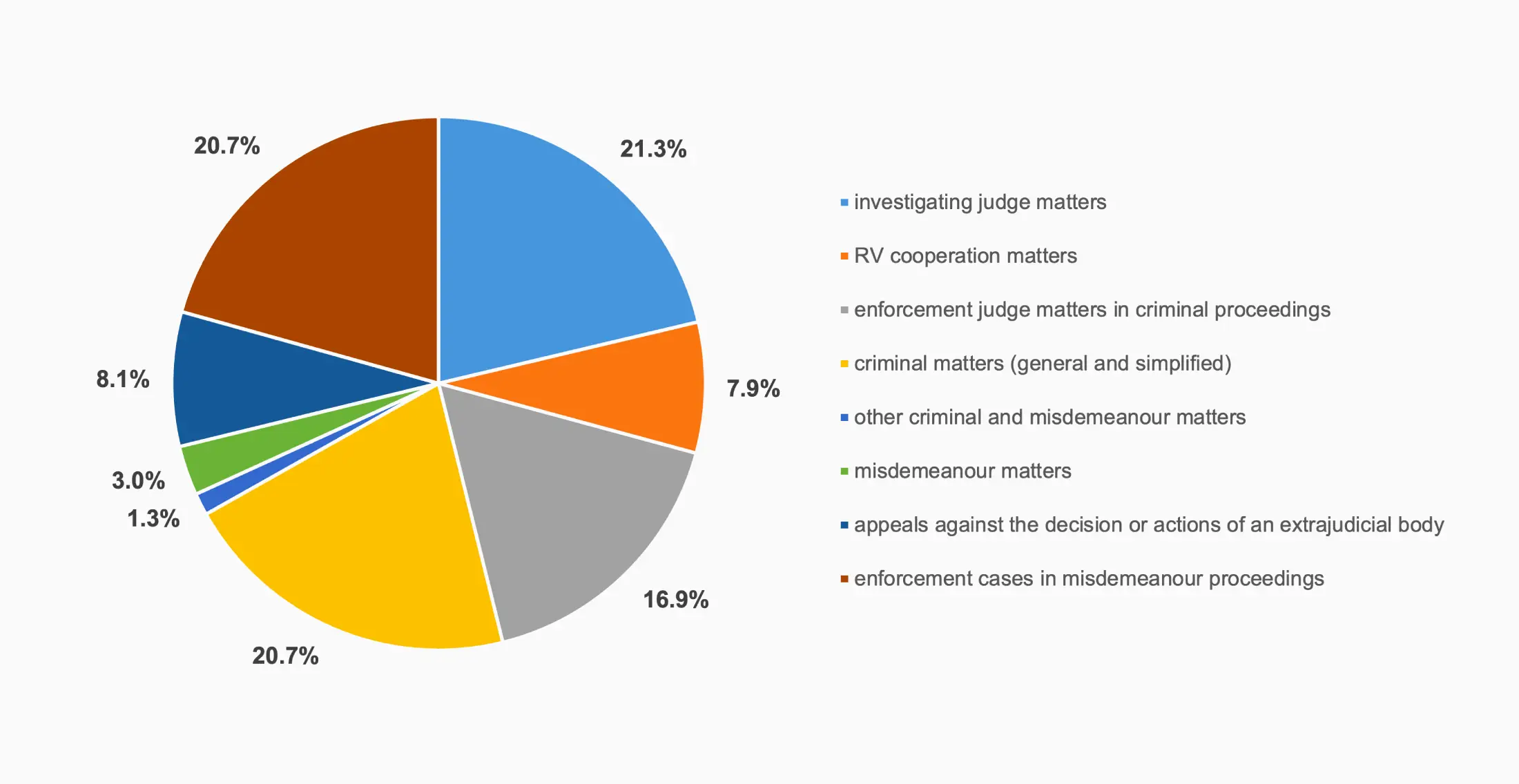
The total number of criminal matters adjudicated in the district courts in general and summary proceedings was 3182 (20.7% of the total number of criminal and misdemeanour matters adjudicated). The number of matters adjudicated by the preliminary investigation judges was 3272, or 21.3%, while a significant part of the work consisted of the execution of misdemeanour proceedings, which were adjudicated in 3176 cases (20.7%). A more detailed breakdown is shown in the figure below.
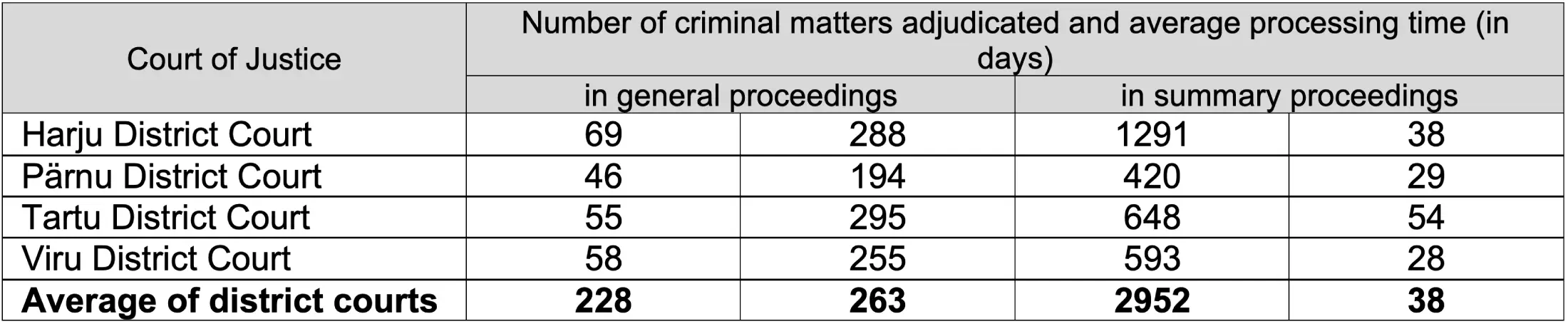
The smallest in number, but the largest in terms of workload, are the general proceedings, of which the district courts adjudicated a total of 228 (with an average processing time of 263 days). A total of 2952 criminal matters were adjudicated in the district courts in the various types of summary proceedings, with an average processing time of 38 days. The average processing time of adjudicated criminal proceedings by district court in 2025 is shown in the table below.[8]
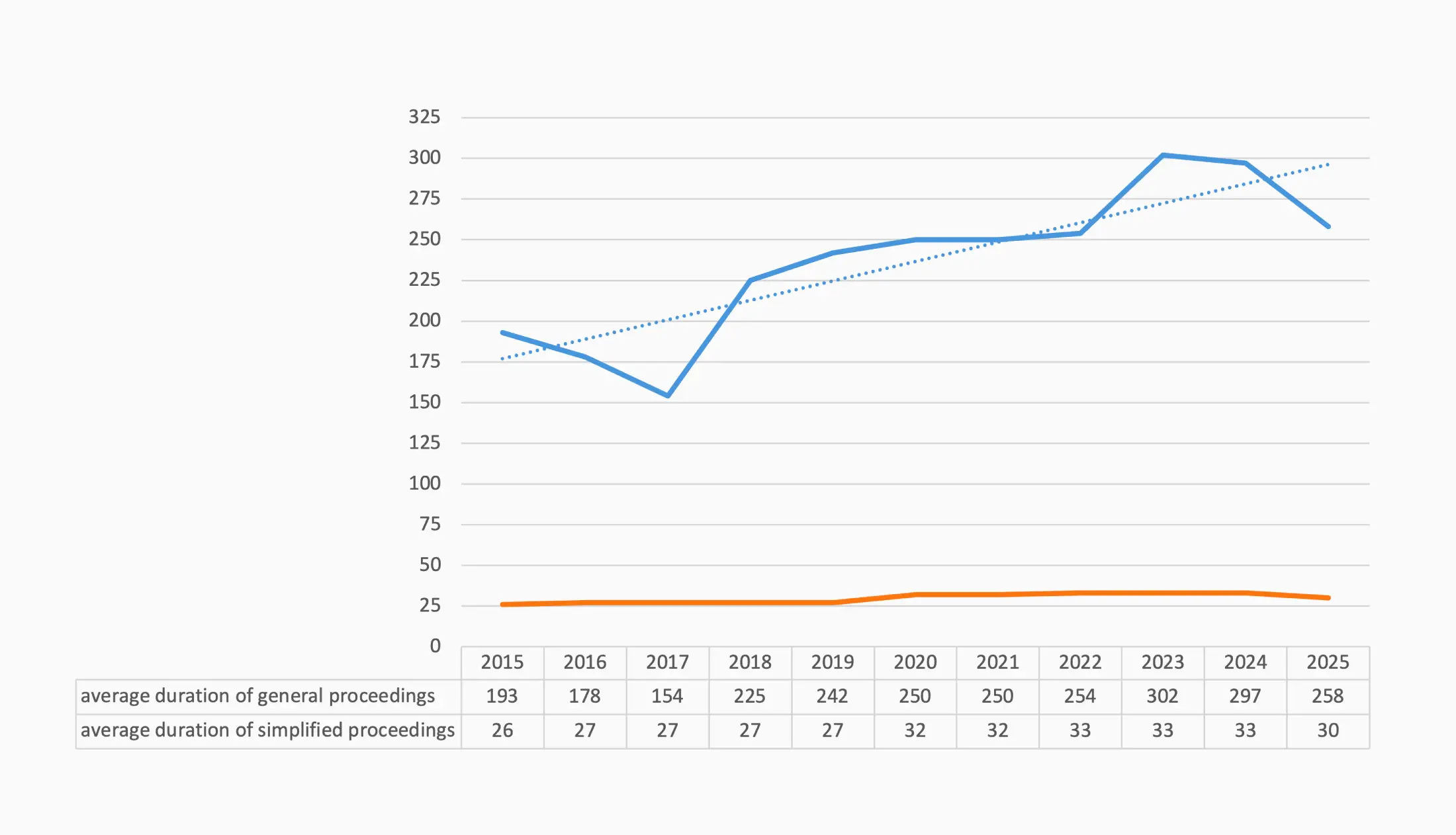
The average processing time for criminal matters decided on the merits in the general proceedings[9] over a longer period is shown in the table below.
Around 30% of adjudicated criminal matters were traffic offences, 18% were offences against a person and 16% were offences against property.[10] The share of criminal matters involving a minor as a party in the proceedings (either the accused or the victim) in the total number of adjudicated matters was around 9%.
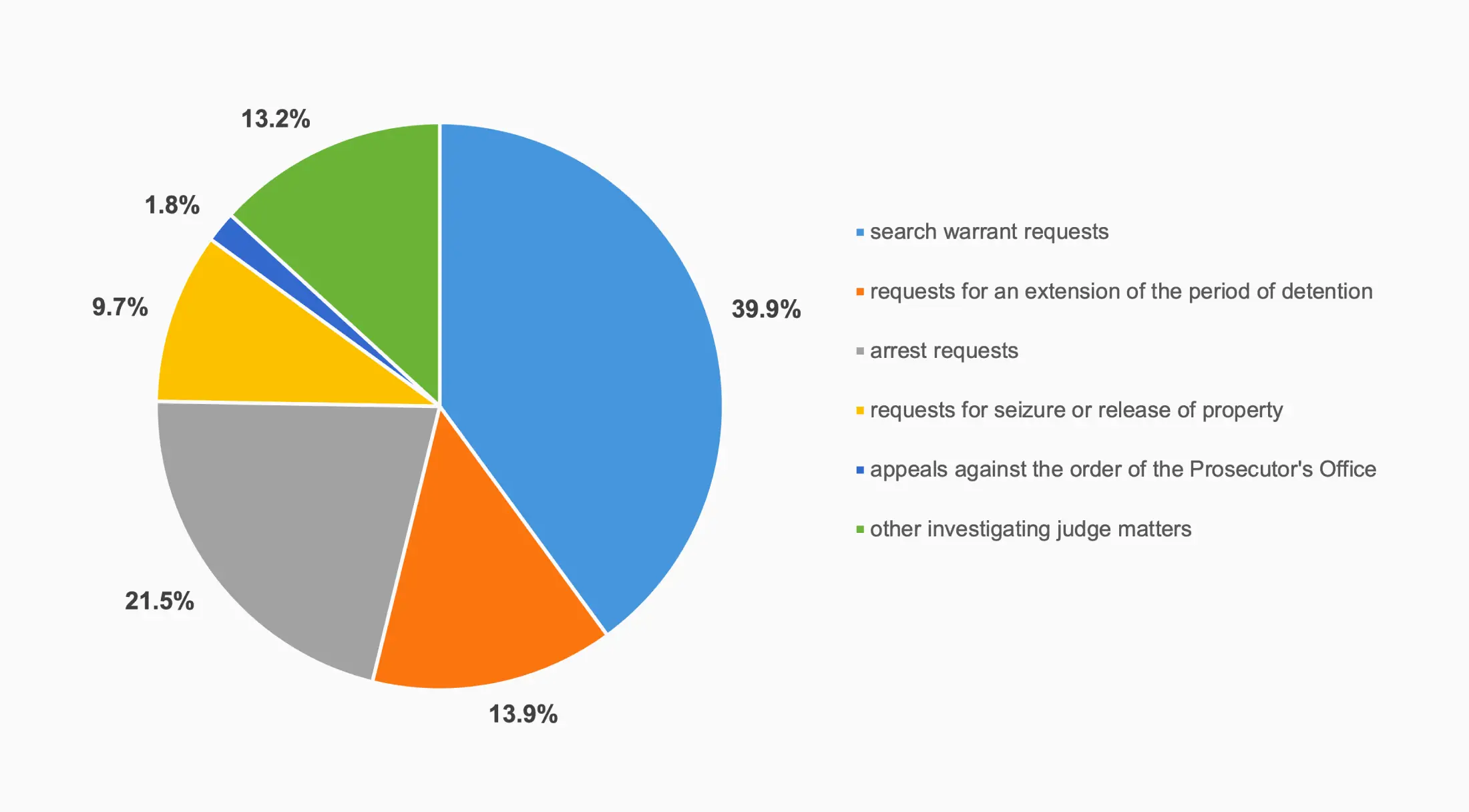
A total of 3272 preliminary investigation judge matters were adjudicated in district courts, of which the majority, or 61.2%, were applications for search and arrest warrants (1307 and 702 resolved applications respectively). While applications for arrest warrants were resolved on the day of arrival, applications for search warrants were resolved in 1.5 days on average. A more detailed breakdown of the preliminary investigation judges’ caseload in 2025 is shown in the figure below.
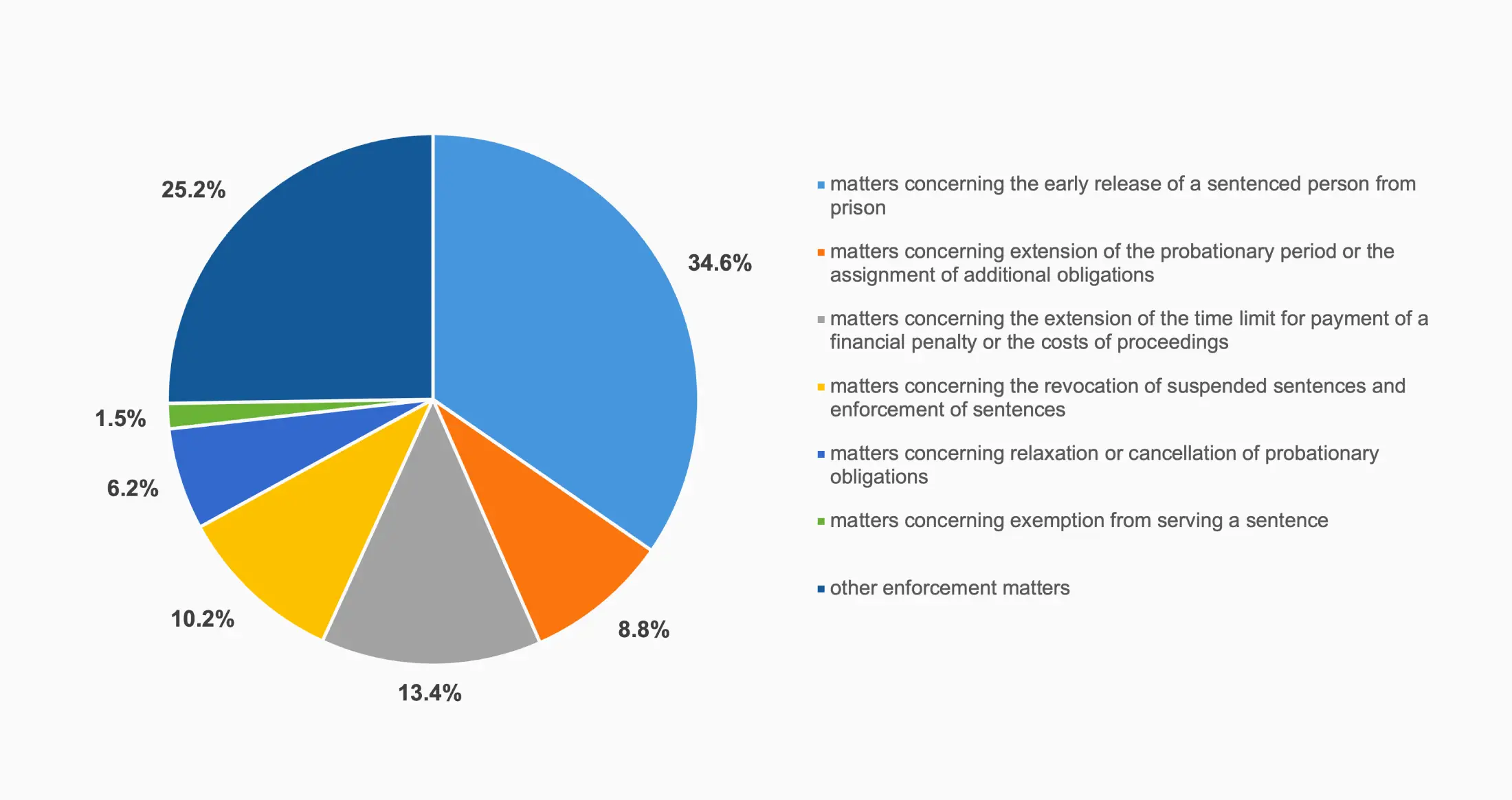
A total of 2599 matters of enforcement judges were adjudicated in district courts, of which the largest share, or 34.6%, were matters of early conditional release of convicted persons from prison. The average processing time for a total of 900 matters was 41 days. A more detailed breakdown of the enforcement judges’ caseload in 2025 is shown in the figure.
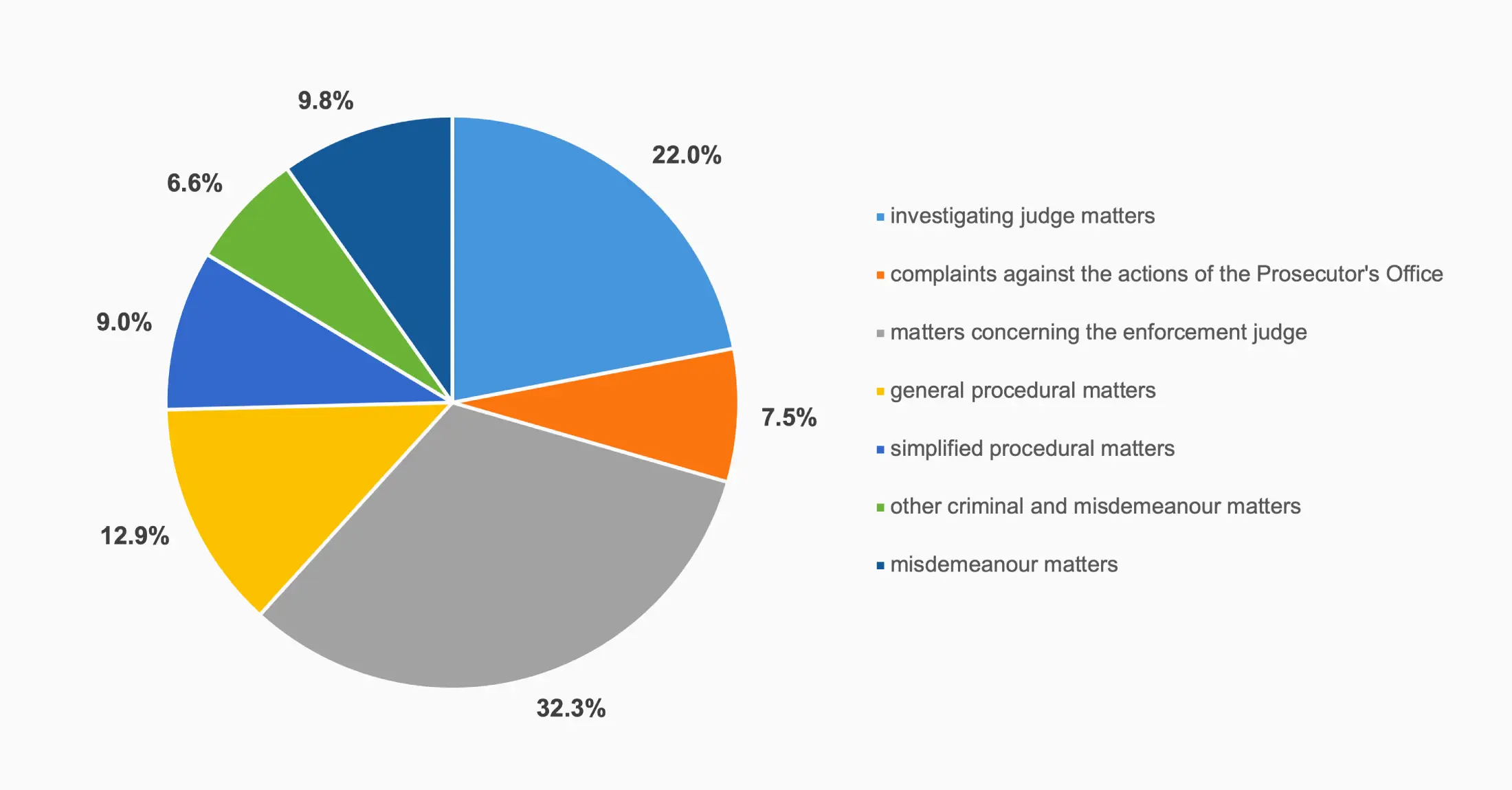
A total of 1525 criminal and misdemeanour matters were adjudicated in the circuit courts (6.3% more than in 2024), of which 753 were resolved in Tallinn Circuit Court and 772 in Tartu Circuit Court. A total of 305 criminal matters were adjudicated in the appeal proceedings in circuit courts (153 in Tallinn and 152 in Tartu circuit courts), with an average processing time of 72 days.[11] There were 166 misdemeanour matters adjudicated in circuit courts. The performance rate of adjudicating criminal and misdemeanour matters was 99% in both circuit courts. Regardless of the type of proceedings in the circuit court, the largest share was made up of matters of the enforcement judges (643 matters or 32.3% of the total number of criminal and misdemeanour matters adjudicated in the circuit court), matters of the preliminary investigation judges (291 or 22.0%) and general proceedings (250 or 12.9%). A more detailed substantive breakdown of the number of criminal and misdemeanour matters brought to the circuit court is shown in Figure 14.
Circuit courts reviewed 11.6% of the criminal matters adjudicated in district courts. The substantive results of matters adjudicated in circuit courts, summarised in a table at[12], are as follows:

Adjudication of administrative matters in administrative and circuit courts
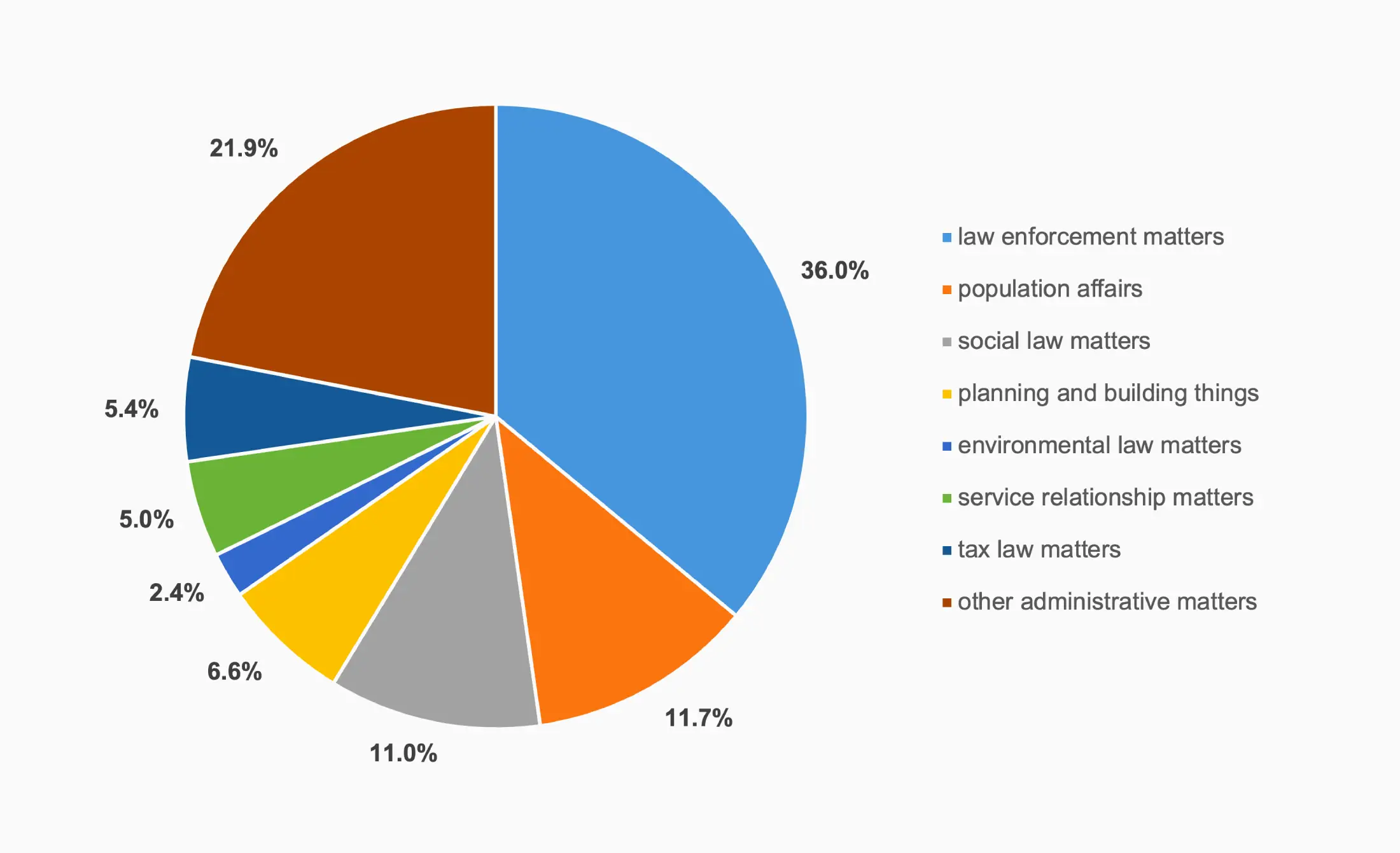
Administrative courts adjudicated 3142 administrative matters (6.6% fewer than in 2024), including 1858 in Tallinn Administrative Court (9.2% fewer than in 2024) and 1284 in Tartu Administrative Court (2.7% fewer). Based on the content of administrative matters, the highest number of matters adjudicated was in the area of law enforcement (36.0% of the total number of administrative matters, or 1131 matters). A more detailed breakdown of the administrative matters is shown in the figure below.
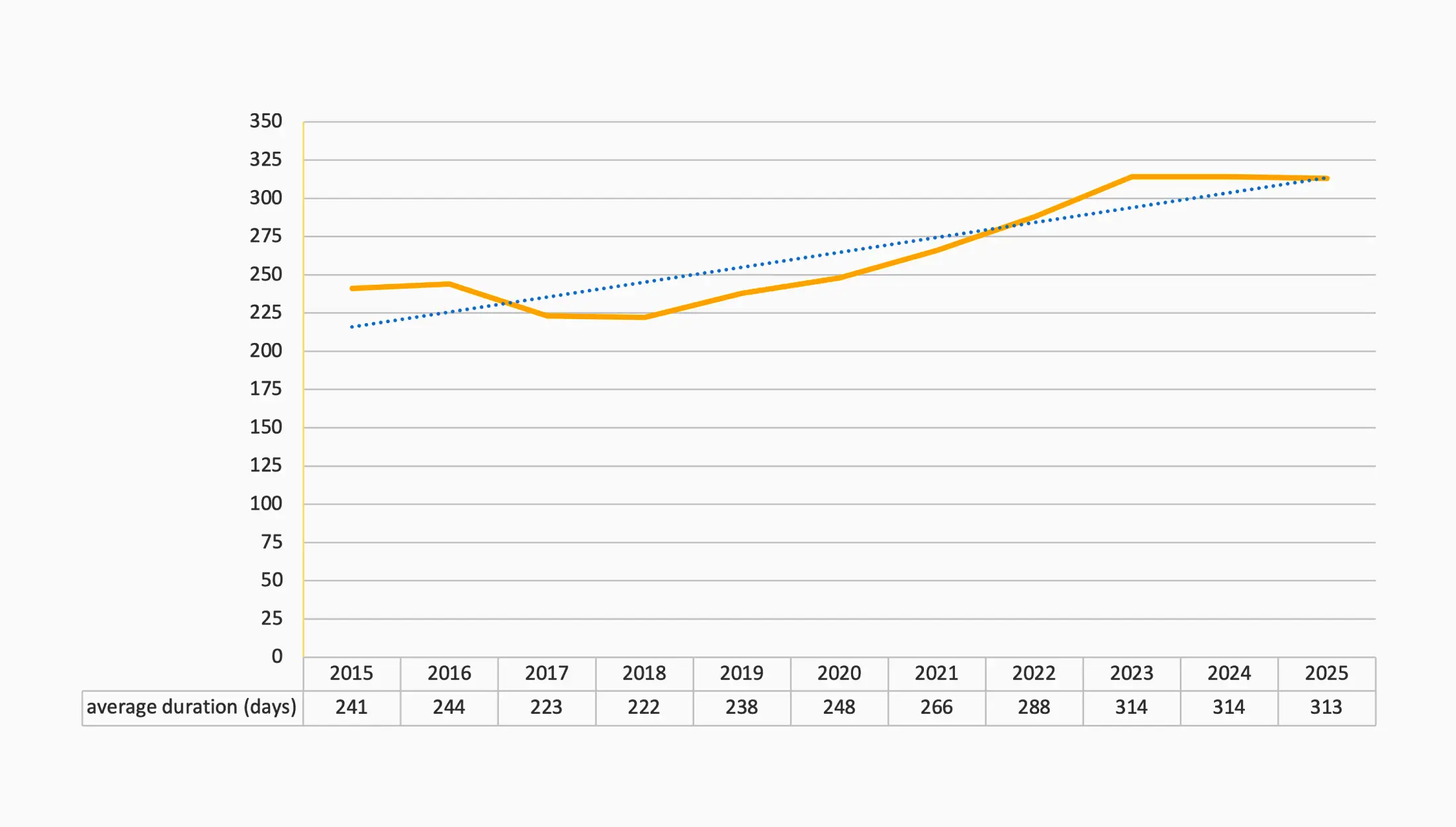
The overall average processing time for adjudicated administrative matters in administrative courts was 142 days.[13] 88.2% of the total number of matters were adjudicated in written proceedings. In the Tallinn Administrative Court, this proportion was 81.6%, and in the Tartu Administrative Court, it was as much as 97.7%.
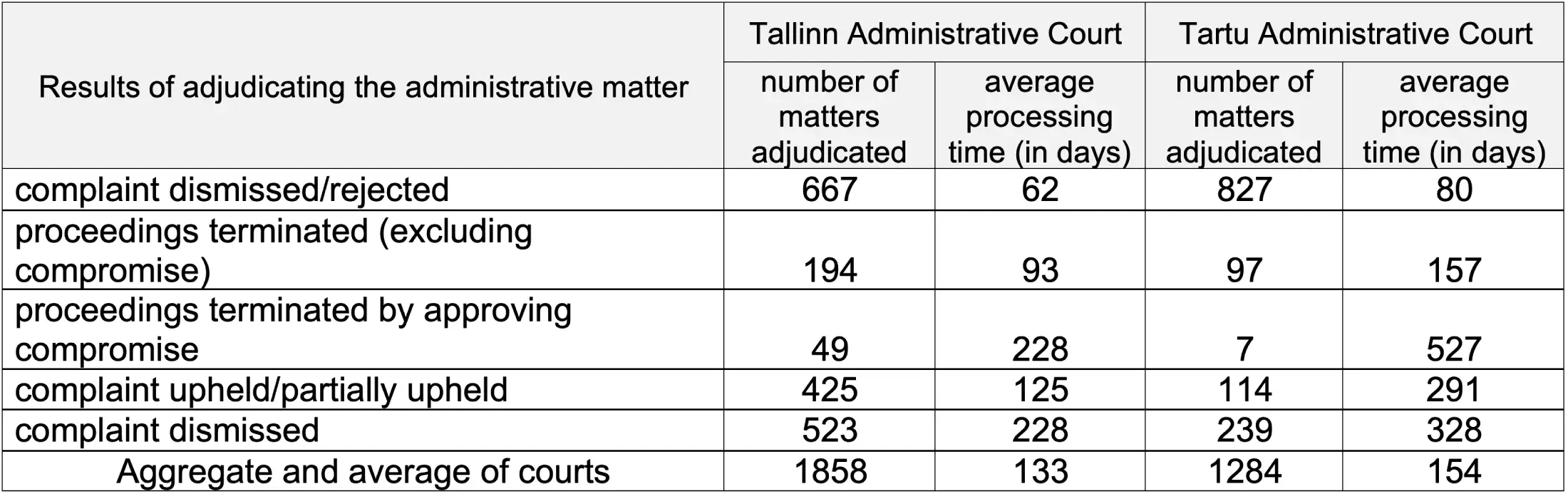
The main substantive results of matters adjudicated in administrative courts and the average processing time are summarised in the table below.
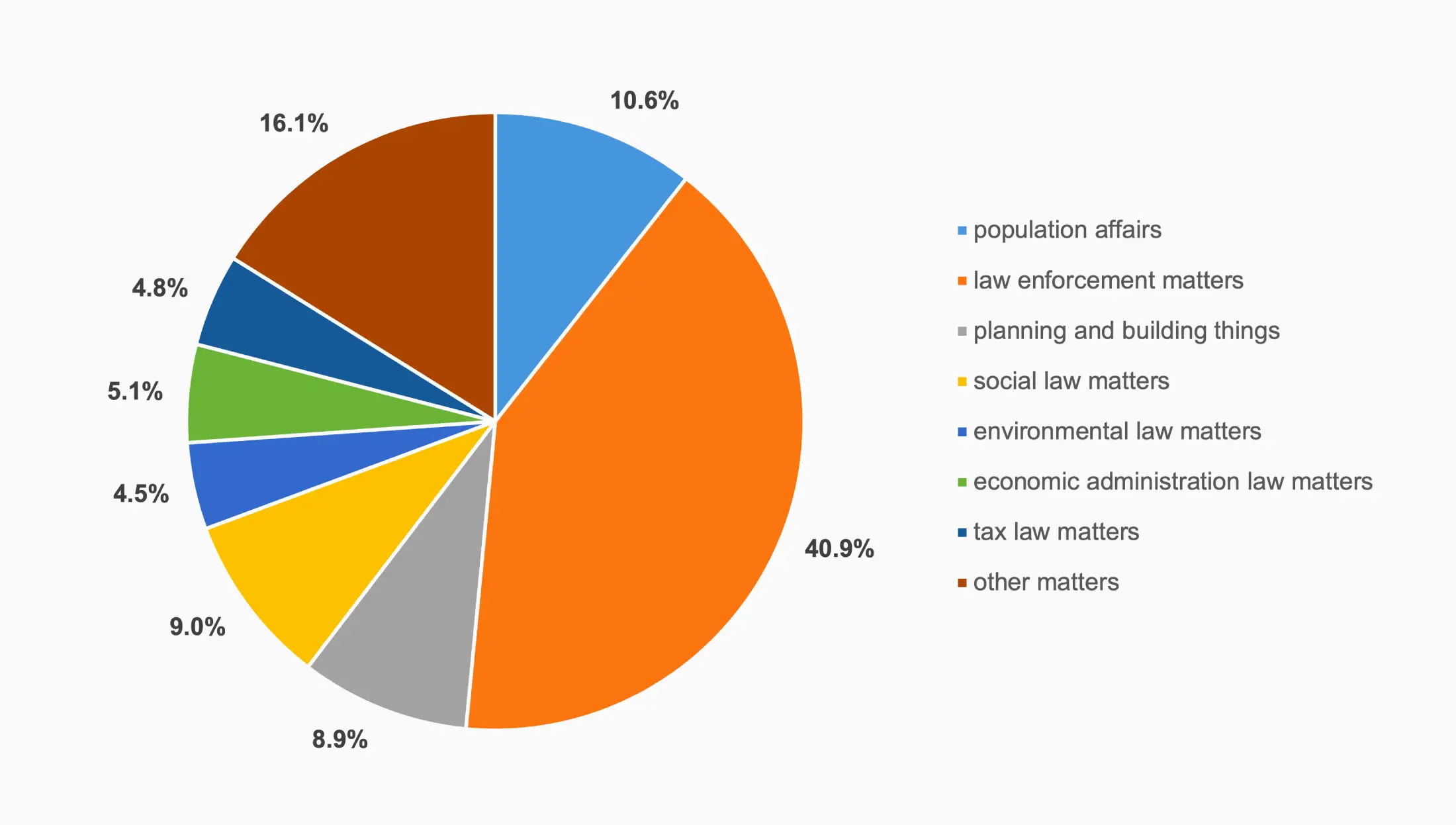
A total of 1716 administrative matters were adjudicated in circuit courts (3.6% more than in 2024), of which 988 were adjudicated in Tallinn Circuit Court and 728 in Tartu Circuit Court. The average performance rate of matters adjudicated in circuit courts was 97%. The number was 100% in Tallinn Circuit Court and 94% in Tartu Circuit Court. Regardless of the type of proceedings in the circuit court[14], the largest share was accounted for by law enforcement matters (702 matters, or 40.9% of the total number of matters adjudicated), population matters (182 matters, or 10.6%) and social law matters (154 matters, or 9.0%). The figure below shows a more detailed substantive breakdown of the administrative matters adjudicated in the circuit courts.
On average, administrative matters were adjudicated in appeal proceedings in 399 days, including in 453 days in Tallinn Circuit Court and in 262 days in Tartu Circuit Court. The average processing time of the interlocutory appeal proceedings was 40 days (47 days in Tallinn Circuit Court and 33 days in Tartu Circuit Court).[15]
Circuit courts reviewed 38.9% of the matters adjudicated in administrative courts. The substantive results of administrative matters adjudicated in circuit courts[16] are shown in the table as follows:

____________________________
[1] Background information. Crime statistics – Crime 2025. Criminal procedure matters include all matters brought before the district courts in criminal court proceedings, which are divided as follows: preliminary investigation judge matters, enforcement judge matters, plea agreement procedure matters, abridged procedure matters, injunction procedure matters, regular rules procedure matters, compulsory psychiatric treatment matters, international cooperation matters and state legal aid matters.
[2] The total number of civil matters filed in district courts (supervisory proceedings are excluded) and the number of expedited payment order matters filed with the Haapsalu Courthouse of Pärnu District Court are included.
[3] Longer-term overview of judicial statistics by type of proceedings.
[4] Trends in average processing time can be viewed on the courts’ website: page “Civil matters in district courts”, data as of 01.01.2026.
[5] Background information. The types of proceedings in the circuit court are appeal proceedings and interlocutory appeal proceedings. In the latter case, no distinction is made between an interlocutory appeal against a final decision of the court of first instance and an interlocutory appeal against the court of first instance’s ruling that organises proceedings.
[6] Trends in average processing time can be viewed on the courts’ website: page “Civil matters in circuit courts”, data as of 01.01.2026.
[7] Background information. The results of first instance court decisions in circuit court shown in the table are calculated from matters adjudicated in district court in 2025.
[8] Trends in average processing time can be viewed on the courts’ website: page “Criminal proceedings in district courts”, data as of 01.01.2026.
[9] The data in the figure represent criminal matters in which the defendants have either been convicted or acquitted
[10] Different types of offences can be the subject of separate criminal proceedings, but different types of offences can also be the subject of the same criminal proceedings.
[11] Trends in average processing time can be viewed on the courts’ website: page “Criminal and misdemeanour matters in circuit courts”, data as of 01.01.2026.
[12] Background information. The results of first instance court decisions in circuit court shown in the table are calculated from matters adjudicated in district court in 2025.
[13] Trends in average processing time can be viewed on the courts’ website: page “Administrative matters in administrative courts”, data as of 01.01.2026.
[14] Background information. The types of proceedings in the circuit court are appeal proceedings and interlocutory appeal proceedings. In the latter case, no distinction is made between an interlocutory appeal against a final decision of the court of first instance and an interlocutory appeal against the court of first instance’s ruling that organises proceedings.
[15] Trends in average processing time can be viewed on the courts’ website: page “Administrative matters in circuit courts”, data as of 01.01.2026.
[16] Background information. The results of first instance court decisions in the circuit courts shown in the table are calculated from the matters adjudicated in the administrative court in 2025.